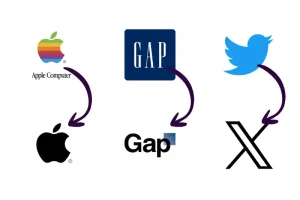
Rebranding is a major decision for leadership, promising a revitalised market stance and growth. Many companies have achieved legendary success through rebranding, but others have suffered customer loss, financial setbacks, and reputation damage from failed attempts.
Embarking on a rebranding journey without a clear-eyed, balanced understanding of both the potential rewards and the inherent risks is like setting sail in a storm without a compass. The potential upside is enormous, but the pitfalls are deep and numerous. This post offers a comprehensive and balanced view for strategic decision-making, examining the compelling advantages and significant challenges of rebranding. By weighing these pros and cons, you can make a more informed, strategic choice about whether this transformative path is right for your organisation
The Upside: Advantages of a Successful Rebrand
When executed with strategic precision, a rebrand can be a powerful catalyst for growth, yielding a multitude of significant benefits that permeate every facet of the organisation.
1. Attract New and Better Customers
A rebrand is a powerful magnet. It can capture the attention of entirely new audiences who may have previously overlooked your company. By redefining your messaging and visual identity, you can strategically target more desirable customer segments. Those who are more aligned with your new vision have a higher lifetime value or are more likely to become brand advocates. For existing customers, a well-executed rebrand can rekindle interest and reinforce their decision to do business with a forward-thinking company. This renewed focus on attracting the right audience is a cornerstone of effective
lead generation strategies.
2. Command Premium Prices and Boost Profitability
Perception is value. A successful rebrand enables you to redefine how your offerings are perceived in the market, often justifying a shift to a more premium pricing strategy. By improving your brand’s image and clearly communicating its unique value, you can shift the conversation from price to value, leading to greater profitability. Research consistently shows that strong, well-regarded brands build greater equity and command higher multiples in the market, directly impacting your bottom line.
3. Differentiate from the Competition
In today’s crowded markets, differentiation is a matter of survival. A rebrand provides a golden opportunity to step back, analyse the competition, and carve out a unique and defensible position. It allows you to clearly articulate your key differentiators and competitive advantages, making it easier for customers to choose you over the competition. This strategic positioning is not only a core tenet of good
branding, but it also has a direct impact on your online visibility, as search engines favour brands that demonstrate clear expertise and authority in a specific niche—a key focus of our
SEO consultancy services.
4. Close Sales More Easily and Reduce Marketing Costs
When your brand is clear, compelling, and consistent, it does a lot of the heavy lifting for your sales and marketing teams. A strong brand story streamlines the sales process because prospects already have a positive perception and a basic understanding of your value proposition. Furthermore, consistent branding across all platforms can significantly increase the efficiency and effectiveness of your marketing efforts. Studies have shown that brand consistency can increase revenue by as much as 10-20%, as it builds trust and recognition, making every marketing pound you spend work harder.
5. Attract and Retain Top Talent
A rebrand is a key tool for defining your employer brand, attracting talent and improving retention by promoting a clear vision and strong culture. It creates pride and alignment within your team. As we explore in “
Your First Advocates: The Power of Internal and Employer Branding“, a strong internal brand is the foundation for attracting the best people.
6. Boost Company Value and Brand Equity
Brand equity is the value derived from consumer perception of the brand name, and is one of a company’s most valuable intangible assets. A successful rebrand can significantly increase this equity by positively altering consumer perception, expanding market share, and strengthening customer loyalty. This isn’t just a “feel-good” metric; it has a measurable impact on share price and the overall monetary value of the company, making the brand a more valuable asset in the event of a future sale or merger.
The Downside: Challenges and Pitfalls
While the rewards are enticing, the path of rebranding is fraught with peril. Understanding these risks is essential for mitigating them.
1. High Costs and Resource Commitment
A rebrand is a substantial financial and operational undertaking. The costs go far beyond designing a new logo. You must account for the development of new brand guidelines, the creation of new marketing materials, a complete website overhaul (a significant
web design project), updating product packaging, replacing physical signage, and potential legal fees for trademarking. Furthermore, it demands a significant commitment of time and human resources from across the organisation. Underestimating this commitment is a common mistake that can lead to a stalled, incomplete, or rushed rollout, which often does more harm than good.
2. Risk of Alienating Existing Customers
This is perhaps the most feared risk of rebranding. Your loyal customers often have a strong emotional connection to your brand. A drastic or poorly explained change can feel like a betrayal, leading to confusion, frustration, and even defection. The infamous case of “New Coke” or the public backlash against Gap’s 2010 logo change (detailed in “
Rebranding Success & Failures: What Apple, Gap & Twitter Can Teach You“) serve as stark reminders of this danger. If your rebrand makes your product unrecognisable or seems to abandon the values your customers cherished, you risk losing the very people who built your business.
3. Loss of Brand Equity and Recognition
Years, sometimes decades, of marketing investment go into building brand recognition. A rebrand, especially one that dramatically changes your name or logo, can effectively press the reset button on that equity. If your audience can no longer find or recognise you, you risk becoming invisible. This is particularly dangerous for brands that rely heavily on their established reputation and visual cues for sales, as Tropicana discovered when its packaging redesign led to a 20% drop in sales.
4. Uncertain Return on Investment (ROI)
Despite the best intentions and a significant investment, there is no guarantee of a positive return on a rebranding initiative. The market’s reaction can be unpredictable. A rebrand can fail to resonate, leading to stagnant or even reduced revenues. This uncertainty makes it a high-stakes investment that requires a strong strategic rationale and clear, measurable objectives to justify the risk.
5. Negative Media Attention and Public Backlash
In the age of social media, public opinion can be swift and unforgiving. A rebrand that is perceived as unnecessary, poorly executed, or inauthentic can become the subject of widespread ridicule and negative media attention. This digital firestorm can damage a brand’s reputation for years, long after the initial controversy has faded.
6. Brand Confusion and Mixed Messaging
If a rebrand is not rolled out consistently across all touchpoints, it can lead to a confusing and fragmented brand experience. Customers might see the old logo on one platform and the new one on another, leading to a loss of trust and a perception of unprofessionalism. Similarly, if the new brand’s tone of voice is not clearly defined and adopted, it can result in mixed messaging that dilutes the brand’s impact.
7. Loss of Internal Focus and Employee Disengagement
A rebrand demands significant internal attention, potentially diverting focus from other critical business operations. Furthermore, if the process is not managed well internally, it can lead to employee confusion, resistance, and a decline in morale. If employees don’t understand or believe in the new brand, they cannot be effective ambassadors for it, which undermines the entire effort.
A Calculated Risk for Growth
The decision to rebrand is a strategic dilemma that requires a clear-eyed assessment of both the glittering potential and the significant perils. It is not a silver bullet for business problems, but rather a powerful tool that, when used correctly, can unlock transformative growth.
The key to navigating this high-stakes game is preparation. A successful rebrand is never a leap of faith; it is a calculated risk based on deep research, clear strategy, and meticulous planning. Before committing, an organisation must conduct a thorough cost-benefit analysis and a comprehensive risk assessment. Is the potential reward of attracting a new market segment worth the risk of alienating a portion of your loyal customer base? Is the strategic imperative to reposition strong enough to justify the significant financial investment?
As we explore in “
From Discovery to Launch: Mastering the Phases of Rebranding“, a disciplined, phased approach is the best way to mitigate these risks. By engaging in deep discovery, building a solid strategy, involving key stakeholders, and planning a meticulous rollout, you can significantly increase your chances of success.
Ultimately, the decision to rebrand should be made from a position of strategic clarity, not desperation. If you’re considering this path, engaging with a
digital consultancy can provide the objective analysis and expert guidance needed to weigh the pros and cons effectively, ensuring that if you do decide to take the leap, you land on your feet, ready for the next chapter of growth.